ZJU-ELEDIA International Summer School on Green Electromagnetic Spectrum
Future City Landscape
July 23 - August 5, 2026 | Hangzhou, China

Green Electromagnetic Spectrum

From Physical Limits of Information to Integrated Communications, Sensing, and Power Transfer

Our Vision & Goals

We aim to redefine the green boundaries of 6G by breaking disciplinary barriers. Our vision is to build a "zero-power, zero-blind-spot, and energy-self-sufficient" digital world through the deep integration of communication, sensing, and power transfer.

Global Recruitment

We are conducting global recruitment for 40 elite PhD students. To ensure a diverse academic environment, the cohort will consist of:

50% International
50% Domestic

The Organizing Committee reserves the right of final selection based on academic merit and program fit.

Physics - Information - Energy

The Golden Loop

Distinguished Lecturers

Learn from world-renowned experts and IEEE Fellows pioneering the future of electromagnetics.

Prof. Wei E. I. Sha

Wei E. I. Sha

IEEE Fellow

Zhejiang University

Prof. Xudong Chen

Xudong Chen

IEEE Fellow

National University of Singapore

Prof. Linglong Dai

Linglong Dai

IEEE Fellow

Tsinghua University

Prof. Andrea Massa

Andrea Massa

IEEE Fellow

University of Trento

Prof. Giacomo Oliveri

Giacomo Oliveri

IEEE Fellow

University of Trento

Prof. Chengbin Ma

Chengbin Ma

IEEE Fellow

Shanghai Jiao Tong University

Program Schedule

July 23-24

EM Information Theory

July 25-26

ISAC

July 27-28

Near-Field Comms

July 29-30

Cultural Activities

July 31 - Aug 2

Surface EM Engineering

Aug 3-4

MHz WPT Systems

Aug 5

Exam & Closing

Module 1 July 23-24

Electromagnetic Information Theory

Prof. Wei E. I. Sha IEEE Fellow, ZJU

"Unifying Wave Physics, Statistical Thermodynamics, and Information Limits"

  • Unify electromagnetic engineering and information theory for 6G innovation.
  • Analyze communication channels as EM operators using Dyadic Green's Functions.
  • Define Degrees of Freedom (DoF) via the Spatial Heisenberg Uncertainty Principle.
  • Derive physical bounds for energy efficiency using statistical thermodynamics.
Electromagnetic Information Theory Visualization
Integrated Sensing and Communication
Module 2 July 25-26

Integrated Sensing And Communication (ISAC)

Prof. Xudong Chen IEEE Fellow, NUS

  • Explore resource sharing and joint system design in microwave technology.
  • Formulate sensing and imaging based on wave propagation and scattering theory.
  • Address ISAC challenges by solving inverse scattering problems.
  • Introduce high-resolution imaging methods like beam-steering learning.
Module 3 July 27-28

Spectrum-Efficient Near-Field Communications

Prof. Linglong Dai IEEE Fellow, Tsinghua

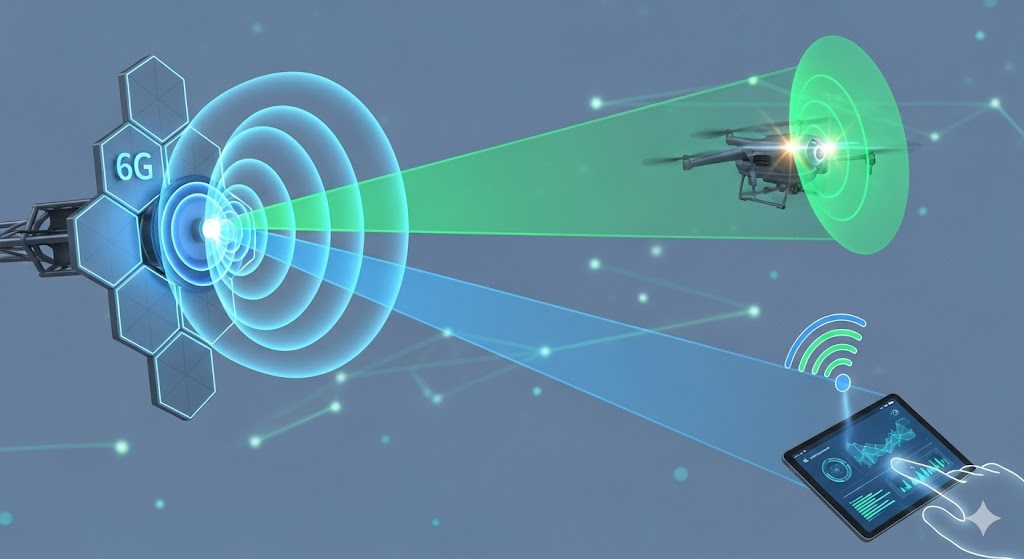
  • Explore 6G transmission theory including massive MIMO and RIS.
  • Investigate near-field communication characteristics for future networks.
  • Integrate wireless AI and electromagnetic information theory for enhanced efficiency.
Near-Field Communications
Cultural Activities
Culture July 29-30

Chinese Heritage & Hangzhou Exploration

Cultural immersion to promote exchange between international and local students.

  • Experience traditional Tai Chi and "Dance Healing" sessions.
  • Visit the Liangzhu Culture site to explore ancient Chinese civilization.
  • Enjoy a guided tour of the scenic West Lake in Hangzhou.
Module 5 July 31 - Aug 2

Surface EM Engineering & Smart Environments

Prof. Andrea Massa & Prof. Giacomo Oliveri IEEE Fellows, Trento
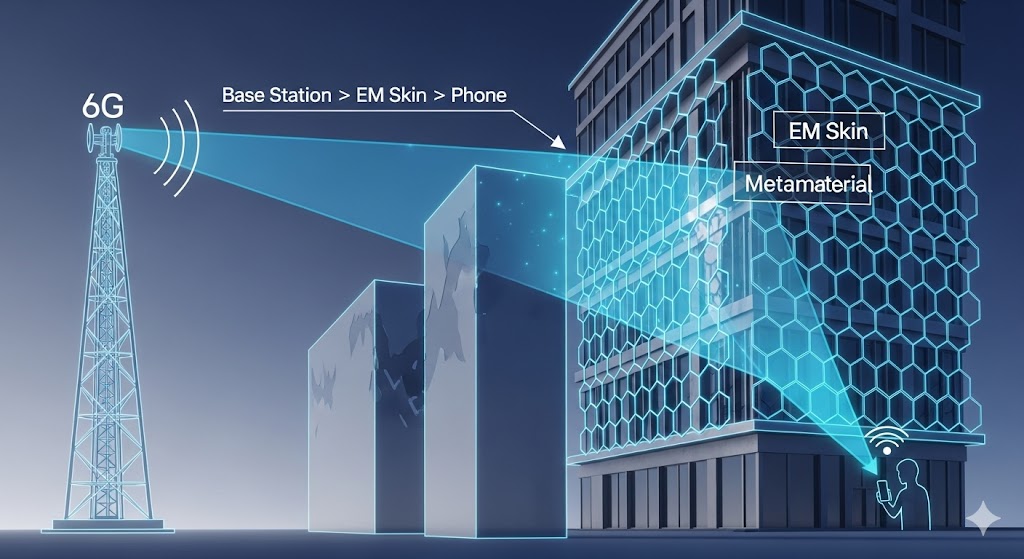
  • Design Smart Electromagnetic Environments (SEME) using Reconfigurable Intelligent Surfaces (RIS).
  • Apply Generalized Snell's Law for passive beamforming without active amplifiers.
  • Mitigate interference and eliminate signal blind spots through environment-aware design.
  • Integrate EM Skins into the physical layer for sustainable infrastructures.
Smart Electromagnetic Environments
Megahertz Wireless Power Transfer
Module 6 Aug 3-4

Megahertz Wireless Power Transfer Systems

Prof. Chengbin Ma IEEE Fellow, SJTU

  • Upgrade from low-frequency to MHz (6.78/13.56 MHz) WPT for spatial freedom.
  • System-level modeling and design using Class E² topologies.
  • Achieve operational robustness in multi-receiver MHz WPT systems.
  • Analyze power conversion from amplifiers to rectifiers via impedance analysis.
Graduation
August 5

ZJU-ELEDIA E-XAM & Graduation

Participate in the final evaluation, celebrate academic achievements, and receive your official certification.

Register for Summer School